
loading...
Functional Food & Beverage

High Pressure & Micro-Jet Homogenizer for Functional Food & Beverage

In the health food and beverage industry, functional foods and drinks are becoming key drivers of market growth. These products deliver essential nutrition and contain specific health-beneficial ingredients like probiotics, nanonutrients, plant extracts, fat-soluble active substances, and more. The bioavailability, stability, and texture of these products directly impact their efficacy and consumer experience.

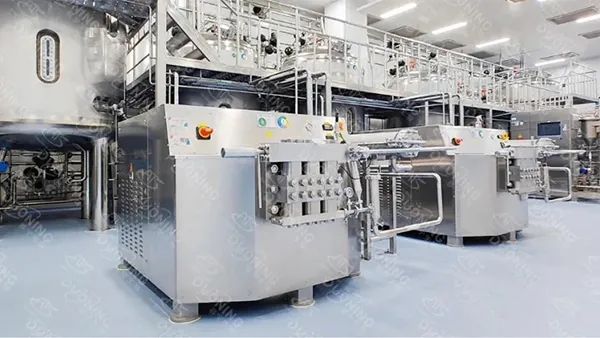
ATS has successfully applied high-pressure homogenization technology with innovative nano-sizing, emulsification, and dispersion of active ingredients in the functional food & beverage products. This ensures seamless scalability while maintaining product quality from lab-scale research to industrial-scale production.
Advantages of ATS High-Pressure Homogenizers in Functional F&B Products
  • Efficient Nanonization & Homogenization
    ATS homogenizers can handle various functional ingredients. Relying on extremely high pressure (up to 2000 bar) and multiple mechanical forces, the homogenizer effectively achieves nanonization, emulsification, and uniform dispersion of active ingredients, significantly improving nutrient bioavailability and product stability.
  • Enhanced Stability & Activity Preservation
    Precise temperature control is essential. ATS homogenizers feature efficient heat exchange systems that effectively manage temperature increases during processing. This prevents the inactivation or breakdown of heat-sensitive ingredients such as probiotics, vitamins, and antioxidants caused by overheating, and maximizes the activity and effectiveness of functional ingredients.
  • Excellent Repeatability and Scalability
    Homogenization results, such as disruption rate, energy consumption, and temperature rise, are highly consistent across various batches. Leveraging expertise in fluid dynamics models enables laboratory-scale process parameters to be effectively and linearly scaled up to industrial scale. This ensures scalability and significantly reduces process transfer risks while maintaining product quality.
  • Compliance with Food Safety Production Standards
    ATS homogenizers are designed in full compliance with food-grade safety standards, meeting the FDA, EFSA, and other regulatory standards. It also supports CIP and SIP online cleaning and sterilization, fulfilling the production needs of different functional foods & beverages—a reliable guarantee for industrial production.
Recommended Products for Functional Food & Beverage Applications
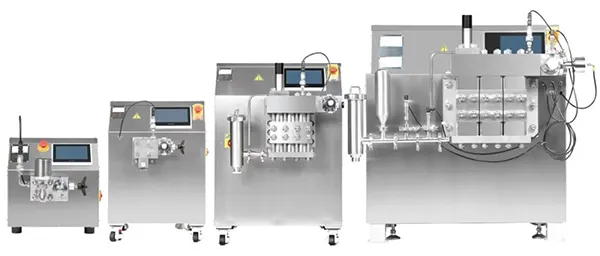
High Pressure Homogenizers
  • Optional two-stage homogenization for a finer and more stable product
  • Equipped with a temperature control system to absorb heat produced during temperature rise
  • Variable flow control system to flexibly adjust flow rates
  • Fully compliant with GMP and CE standards
  • Customizable options for PLC, explosion-proof, and sterile requirements
  • Four-layer overpressure protection to ensure operational safety
  • Scalability from lab to industrial scale (maximum flow rate of 4000 L/H)
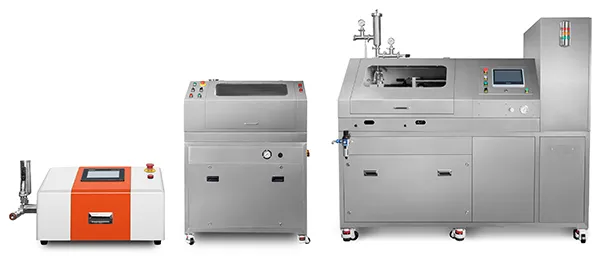
Micro-Jet Homogenizers
  • Producing particles at the nanometer scale
  • Precise control over particle distribution
  • Products that are more uniform in size and more stable
  • High working pressure up to 3000 bar
Cases
  • Production line for Vitamin E encapsulation Production line for Vitamin E encapsulation
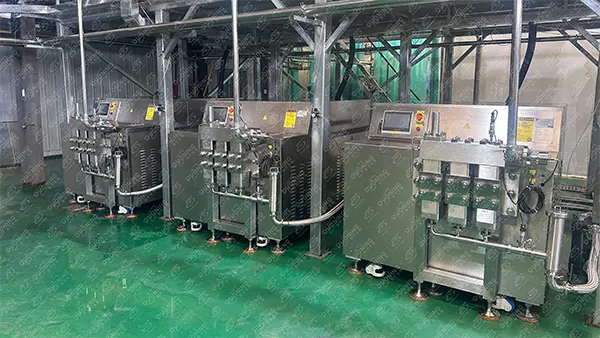
  • Chili sauce production line Chili sauce production line
Experimental Cases
Vitamin A Microcapsule Preparation

After three processing cycles, the Vitamin A sample’s transparency increased significantly. By the third cycle, the sample has become see-through, meeting the customer’s expectations. The processed Vitamin A microcapsule particles reached the nano-level, enabling better absorption and higher bioavailability.
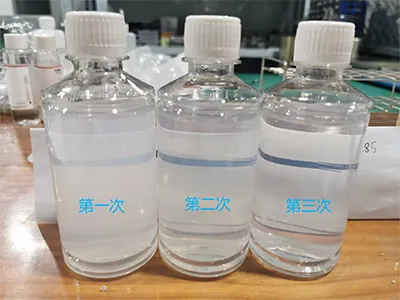
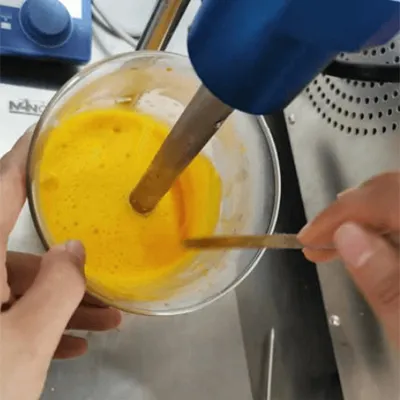
Vitamin A microcapsule before processing

Sea Buckthorn Oil Microcapsule Preparation
  • Challenges
    Due to the nature of sea buckthorn oil, it is not suitable for making into tablets or hard capsules. The more common form at present is soft capsules. Microencapsulation of sea buckthorn oil allows for better development and utilization of its medicinal and health effects on the human body, masks its inherent unpleasant odor, and significantly improves the stability of sea buckthorn oil.
  • Experimental objective
    To reduce the sea buckthorn microcapsule’s size to below 200nm.
  • Experimental process
    1. Weigh the microcapsule wall material and add it to water. Then add the sea buckthorn oil while shearing and continue shearing for 5 minutes to obtain the primary emulsion.
    2. Use an A3 jet chamber with a regular valve seal and a water bath heating temperature control system.
  • Experimental results
    Visual observation
    After two cycles of processing, the oil sample became a lighter yellow.
    Particle size measurement
    Particle size after the first cycle of processing
    Particle size after the second cycle of processing
  • Before encapsulation Before encapsulation
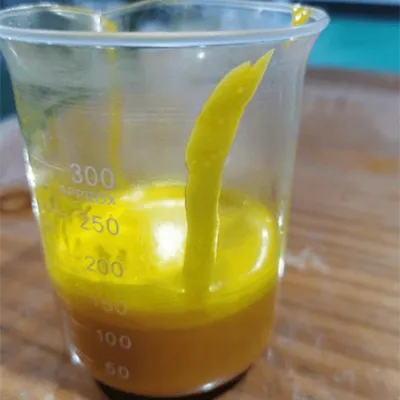
  • After encapsulation After encapsulation
Oat Protein Dispersion Preparation
  • Experimental objective
    Oat protein
  • Equipment
    ATS micro-jet homogenizers
  • Experimental background
    Oat bran, which is the outer part of the whole oat, has the highest protein content at 19.42%. By comparing the dispersion effects under different pressures, we can improve the solubility of oat protein.
  • Experimental process
    1. Pretreatment process: Prepare 2% (w/v) oat protein solution (6 portions, 200ml each).
    2. Use the ATS micro-jet homogenizer to disperse the six portions of oat protein solution under pressures of 0, 500, 750, 1000, 1250, and 1500 bar, respectively, then observe the experimental results.
  • Experimental results
    Visual observation
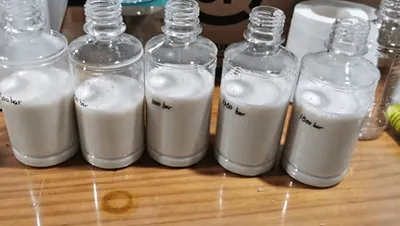
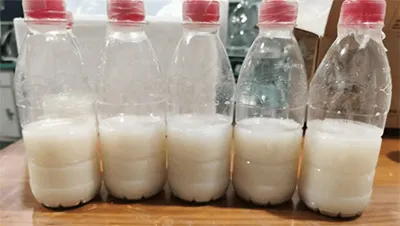
    The oat protein sample before treatment with the micro-jet homogenizer was prone to precipitate, with a layer of oat protein at the bottom of the bottle. After dispersion, the oat protein solution appeared white, uniform, and free of precipitate.
    Particle size and solubility detection
    The data shows that as pressure increases, the solubility of oat protein also improves correspondingly.
  • Before dispersion Before dispersion
  • After dispersion After dispersion
Ready to Start Your Project?

Let us help you find the right nano-processing equipment to support your R&D, scale-up, and production needs.


Applications