
loading...
Fine Chemicals

High Pressure & Micro-Jet Homogenizer for Fine Chemicals

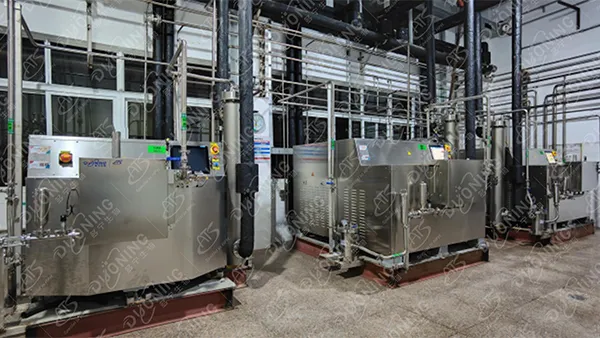
In fine chemical manufacturing, product consistency and process stability are key factors determining both performance and market competitiveness. Fine chemicals such as pigments, electronic chemicals, additives, and specialty polymers require high precision control in particle size and dispersion uniformity. ATS homogenization technology provides high-precision, efficient nano-dispersion, emulsification, and homogenization solutions for fine-chemical preparation and optimization. This will ensure a seamless transition from laboratory-scale to industrial-scale production.
Advantages of ATS Homogenization Technology in Fine Chemicals
  • Ultra-Fine Dispersion and Homogenization
    ATS homogenizers are capable of handling complex samples with high viscosity and high solid content. With high working pressures up to 3000 bar and multiple mechanical forces such as shear, cavitation, and turbulence, the homogenizers can achieve nanoscale dispersion and nanoemulsification. This will produce high-quality fine-chemical products with narrow particle-size distribution and exceptional stability.
  • Precise Process Control and Stability
    Equipped with advanced temperature and pressure control systems to ensure precise control of parameters during processing. ATS homogenizers are integrated with efficient heat-exchange systems to effectively control temperature rise during processing, preventing degradation of heat-sensitive materials, phase separation, and performance reduction. This system enhances the chemical stability and application performance of the product.
  • Excellent Repeatability and Scalability
    Homogenization results, such as the disruption rate, energy consumption, and temperature rise, show high batch-to-batch consistency. With the expertise on fluid dynamics models, small-scale process parameters can be predictably and linearly scaled up to industrial scale, ensuring linear scalability while significantly minimizing process-transfer risks.
  • Strict Quality Standards
    ATS high-pressure homogenizers and micro-jet homogenizers are designed to comply with ISO 9001, cGMP, and other standards. Built with corrosion- and wear-resistant materials and supports CIP/SIP cleaning to meet the requirements of various fine-chemical productions.
Recommended Products for Fine Chemical Application
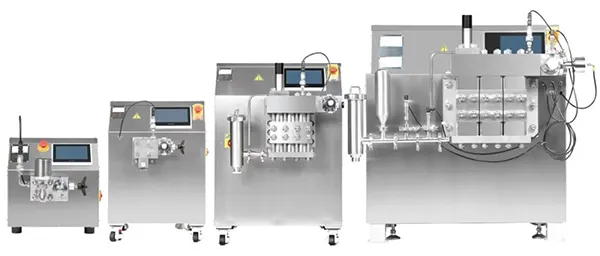
High Pressure Homogenizers
  • Variable flow control system to flexibly adjust flow rates
  • Fully compliant with GMP and CE standards
  • Customizable options for PLC, explosion-proof, and sterile requirements
  • Four-layer overpressure protection ensures operational safety
  • High scalability from laboratory to industrial scale (max flow rate of 4000 L/H)
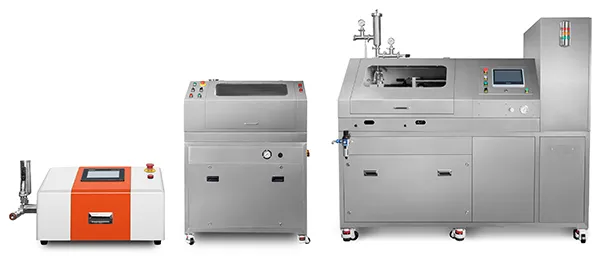
Micro-Jet Homogenizers
  • Creating nano-sized particles
  • Precise control over particle distribution
  • More uniform-sized and stable products
  • Enabling high-pressure operation up to 3000 bar
Case
  • Double-Walled Carbon Nanotube (DWCNT) production line Double-Walled Carbon Nanotube (DWCNT) production line
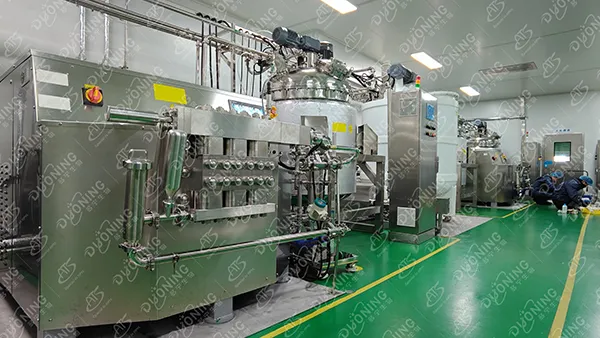
  • Carbon Nanotube (CNT) production line Carbon Nanotube (CNT) production line
Experimental Cases
Normal-Paraffin Nanoemulsion Using Micro-Jet Homogenizer

n-Alkanes are primarily used as the intermediate mono-olefins for manufacturing Linear Alkylbenzene (LAB). The light wax product obtained by molecular sieve adsorption separation and dewaxing has an n-alkane content of over 96%, while the light wax from isopropanol-urea dewaxing contains over 90%. The aromatic hydrocarbon content of both is below 1%. Light wax is mainly used as an intermediate mono-olefin in the manufacture of LAB and can also serve as a raw material for plasticizers, chlorinated paraffins, and petroleum proteins. This experiment will emulsify the n-alkane emulsion to improve product performance.
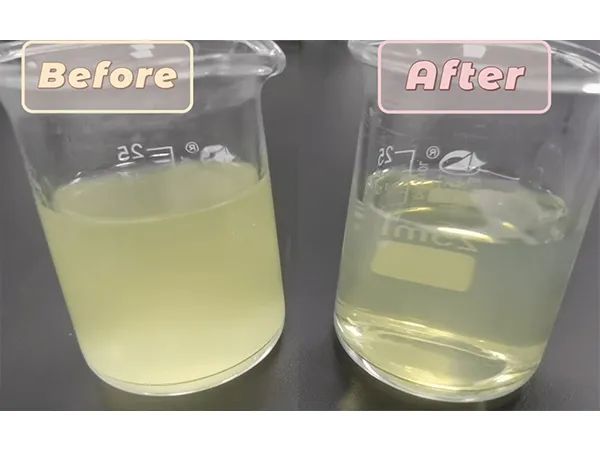
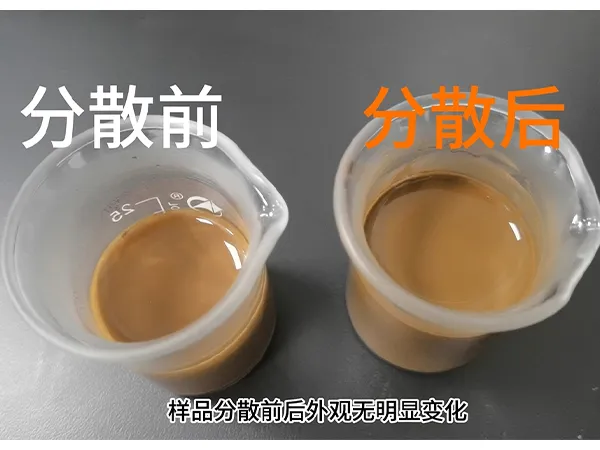
CNT dispersion before homogenization
  • Equipment
    Micro-Jet Homogenizer (Microfluidic Homogenizer)
  • Experimental process
    After preparation, the primary emulsion will be treated three times under high-pressure and temperature control before sampling for particle size measurement. The expected D50 particle size was around 100nm.
  • Experimental results
    Visual observation
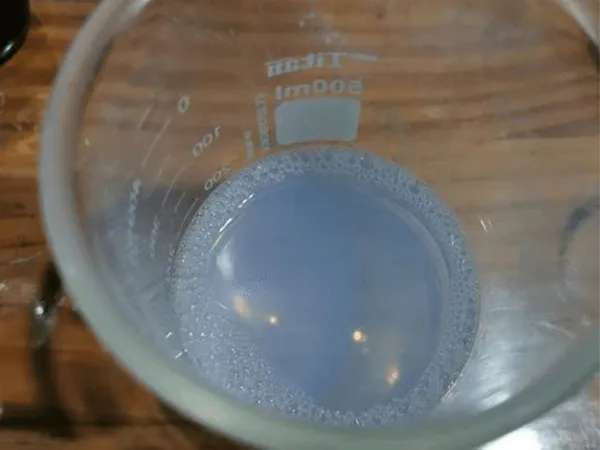
    The emulsified n-alkane emulsion exhibited a certain degree of translucency.
    Particle size measurement
    After emulsification by the ATS homogenizer, the D50 particle size of the n-alkane emulsion significantly reduced from 2.793μm to 90.9nm, achieving the experimental expectation.

Nano-Silicon Slurry Dispersion Using Micro-Jet Homogenizer

Using ATS micro-jet homogenizer to prepare a nano silicon dispersion
In this experiment, ATS nano disperser is used to disperse nano silicon powder in an aqueous medium, forming a highly dispersed, uniform, and stable nano silicon aqueous slurry with higher activity and ease of incorporation.

After the nano silicon slurry was dispersed with ATS nano disperser, the D90 particle size decreased from 14.38μm to 209.8nm.

Menthol Nanoemulsion Using High-Pressure Homogenizer
  • Experimental objective
    The average particle size of the treated menthol solution should reach 30 nm, and the D90 particle size should be less than 100 nm.
  • Experimental process
    1. First, weigh menthol, medium-chain fatty acid glycerides, polyoxyethylene-type surfactant, polysorbate, and sucrose fatty acid esters. Mix under temperature control until the menthol is fully dissolved, yielding a transparent, slightly viscous solution.
    2. While stirring, slowly add the menthol mixture to distilled water. Afterward, shear the sample for another 5 minutes, then adjust the pH to 5.0 using a pH adjuster
    3. Finally, use an ATS high-pressure homogenizer with a specialized emulsification valve seat to homogenize the solution under controlled temperature and pressure.
  • Before emulsificationBefore emulsification
  • After emulsificationAfter emulsification

Experiment results
Visual observation
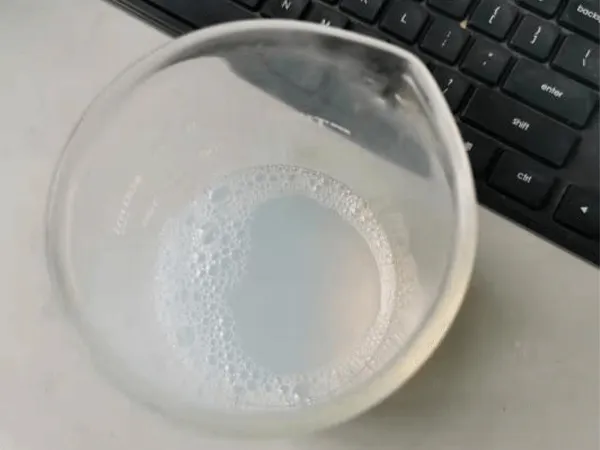
After emulsification, the menthol solution became significantly clearer and showed a slight bluish opalescence.
Particle size observation
After emulsification with the ATS high-pressure homogenizer, the average particle size of the menthol solution was reduced from 98.9 nm to 35.2 nm, while the D90 particle size decreased from 190.6 nm to 82.8 nm, meeting the client's requirements.

Ready to Start Your Project?

Let us help you find the right nano-processing equipment to support your R&D, scale-up, and production needs.


Applications